
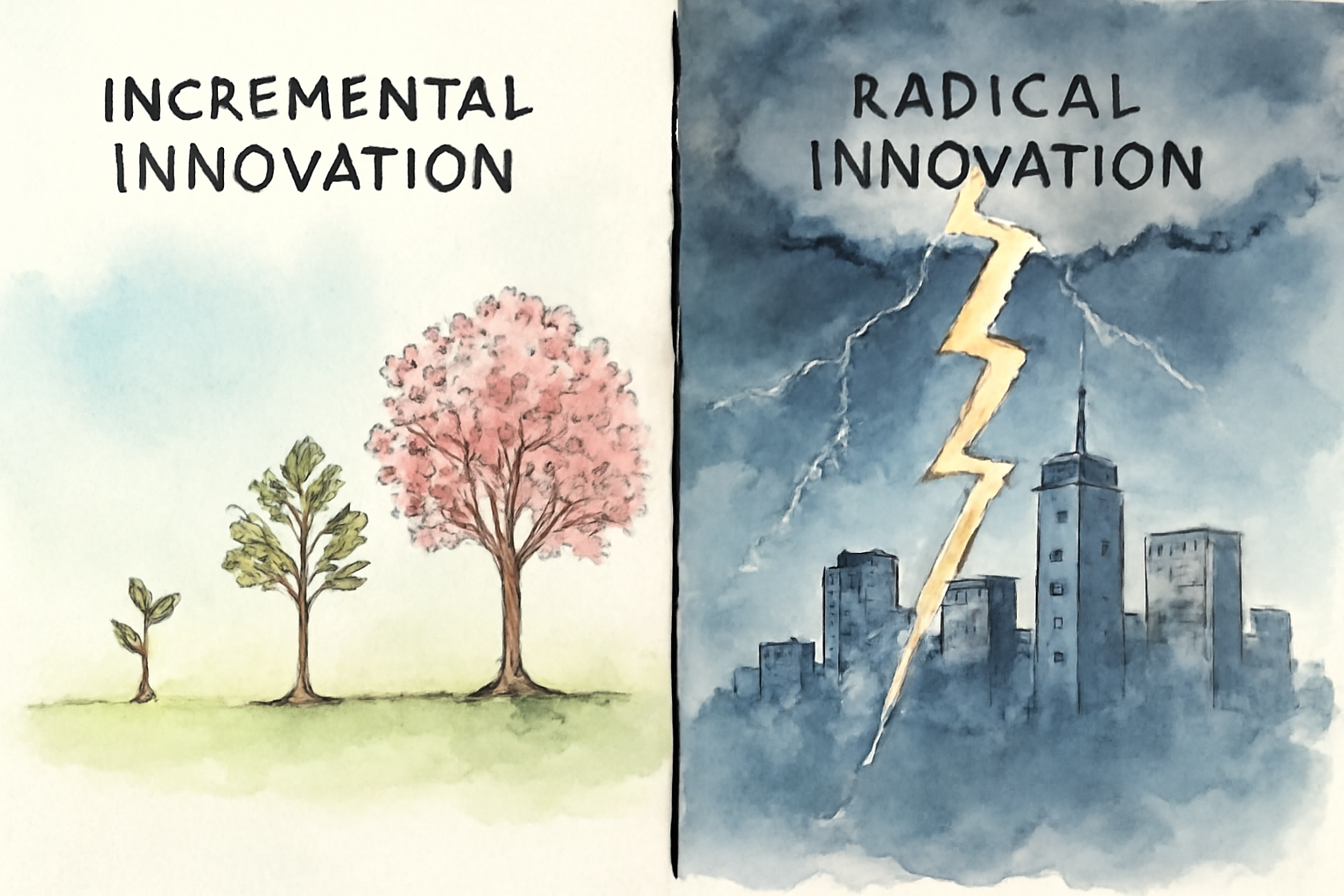
In the sphere of strategic management and business philosophies, understanding the nuances of "Incremental vs. Radical Innovation" is crucial for crafting long-term competitive advantages. These innovation strategies differ fundamentally in their approach to change and development within businesses.
Incremental Innovation involves making small-scale improvements or upgrades to a company's existing products, services, processes, or methods. This type of innovation is continuous and seeks to improve and refine what is already in place. The focus is primarily on efficiency, productivity, and competitiveness. Incremental innovations are often perceived as low-risk and build upon the existing technological, market, and customer understanding. They contribute to the sustaining of market position by enhancing the product attributes valued by the current customer base.
In contrast, Radical Innovation refers to the development of completely new products, services, or business models that significantly alter the landscape of the industry or market. Radical innovations create new markets or disrupt existing ones. They often stem from breakthroughs in technology or new business philosophies and can result in significant changes to consumer behavior. Unlike incremental innovations, radical innovations are high-risk due to the uncertainty involved in market acceptance and the operational complexities of implementing novel solutions. However, they offer high reward potentials by establishing pioneers as industry leaders and possibly creating new demand from previously untapped segments.
Entrepreneurs and business leaders must align their innovation strategy with their overall business objectives and capabilities. Incremental innovation is often employed by companies seeking to consolidate and expand their current market position. Conversely, radical innovation is generally pursued by firms aiming to achieve market leadership or create entirely new markets. Strategic choice between these two depends on various factors, including the industry dynamics, technological capabilities, resource availability, and risk appetite of the organization.
Successfully managing these innovation strategies requires a clear understanding of the company’s current competitive position, core competencies, and strategic vision. Whereas incremental innovation aligns well with maintaining operational consistency and sustained improvements, radical innovation necessitates a higher level of strategic risk-taking and a culture that embraces change and creativity. Integration of both approaches in a balanced manner can often lead to a sustainable competitive advantage, offering value through both the enhancement of existing capabilities and the exploration of new frontiers.